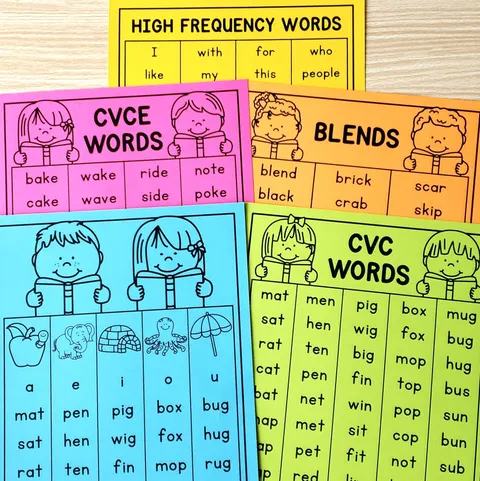
There are many components of reading. The main five are Phonological Awareness, Phonics, Fluency, Vocabulary, and Comprehension. For the purposes of this post, we will be focusing on common high frequency words also known as sight words.
STEP 6 Learn SIGHT WORDS
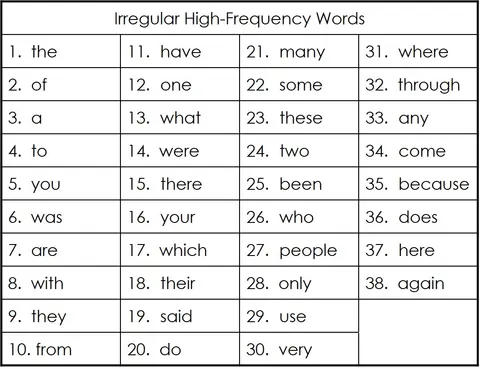
Irregular High-Frequency Words
The benefits of reading high-frequency words with automaticity is obvious in reading. These words make up so much of what is read that stopping for each one would greatly hinder a readers ability to read fluently. Furthermore, irregular high frequency words cannot be sounded out. The sooner readers are able to quickly recognize high frequency words, the better. The American Heritage Word Frequency Book lists the following irregularly-spelled high-frequency words in order of frequency.
Free Sight Word Lists
My Word Lists FREEBIE includes a page full of High Frequency words.
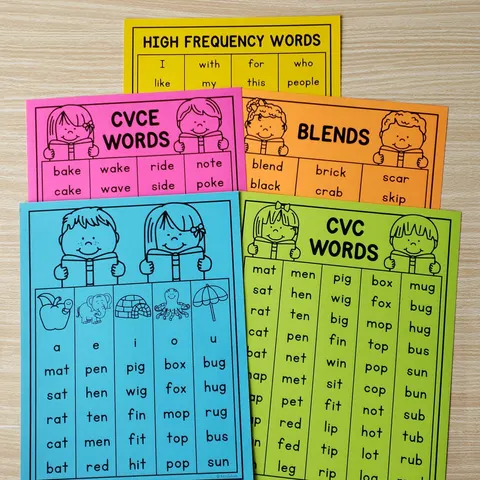
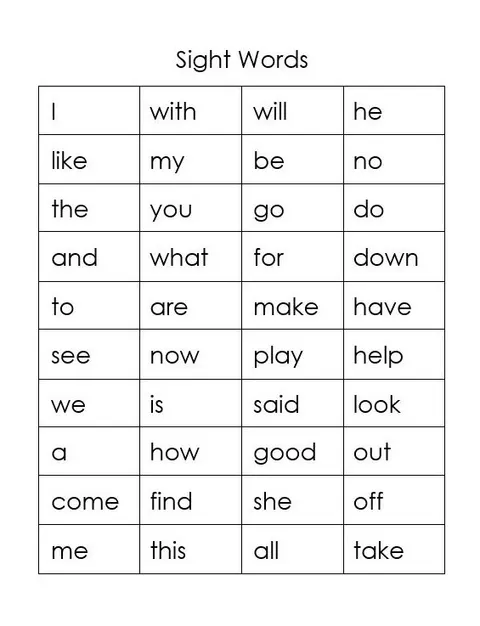
There is also a list of the forty sight words I used when I taught Kinder in my free word lists for subscribers!
We had a large poster with these words and would review them daily. I would refer to them often during writing and model how to use them.
Sight Word Practice and Centers
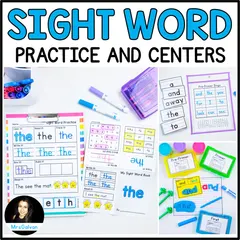
Sight Word Practice and Centers
Practice ALL 133 Pre-Primer, Primer and First Grade Dolch Sight Words with 266 Print and GO pages: 133 Sight Word Practice pages and 133 one-page Sight Word Books. It also includes 133 flash cards, 133 center cards, Pre-Primer, Primer and First Grade assessment lists, and Canva editable templates to add your own words. Perfect for daily sight word review to build reading fluency!
Get it on TpT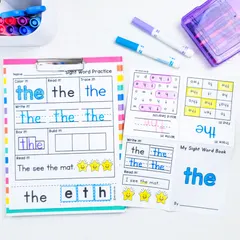
⭐⭐⭐⭐⭐ These worksheets are a fantastic no-prep resource for reinforcing Dolch sight words across multiple levels. The variety of activities keeps students engaged, and the print-and-go format makes it easy to use for centers, homework, or small group instruction. A great addition to any early literacy toolkit! – Kylie S.
Sight Word Bingo
One of my favorite ways to practice is with my Pre-Primer and Primer Dolch Sight Word Bingo Games. It is a simplified version of BINGO with only 9 words per card. You can play it like Tic-Tac-Toe or play to see who fills up their entire card.
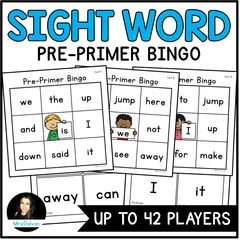
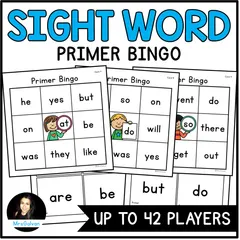
⭐⭐⭐⭐⭐ Kids love the hands on/game approach to working on their sight words. This is a great resource for kids who are motivated by playing games to learn new words. Great resource, thank you! – Sherri B.
KABOOM
Of course we can bring back KABOOM to learn and review sight words! As before, you may choose to create your own game by writing sight words words on large popsicle sticks and writing KABOOM on one or two sticks. The directions are exactly the same. Read the word correctly to keep it. If a player pulls out the KABOOM stick all of their sticks must go back into the container. The player with the most sticks at the end of time is the winner!
Rainbow Writing
I believe that students are better able to remember sight words if they see them regularly, read them, and write them often. One of my favorite spelling word activities to practice sight words is Rainbow Writing . Students write their words fairly large in pencil. Then they come back and write over the pencil with the colors of the rainbow. They may use crayons or colored pencils. Use ROY G BIV to remember the order of the rainbow colors: red, orange, yellow, green, blue, indigo, and violet. You may also allow students to pick any five colors for their Rainbow Writing.
Another method for students to practice writing their sight words is to write Consonants in Blue and Vowels in Red. It is a simple strategy that helps students be more aware of the vowel in their words.
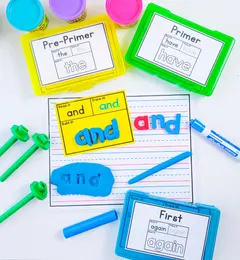
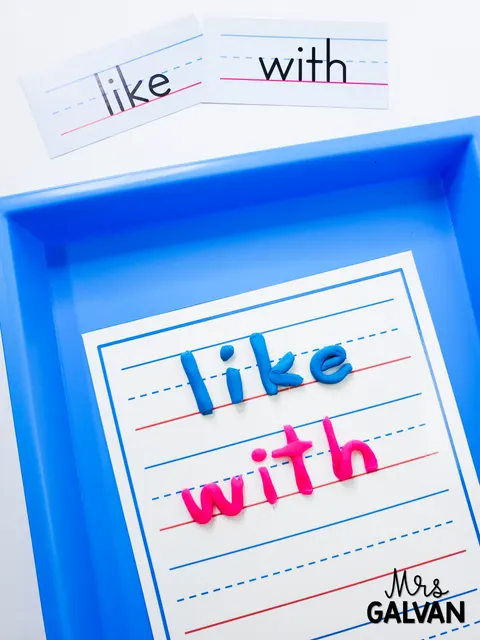
Using playdough to “write” sight words is an engaging activity for kiddos that also helps them develop all of the small muscles in their hands. This will also help improve their pencil grip and writing ability.
Magnetic Letters
Students can also practice High Frequency Words with Magnetic Letters Activities .
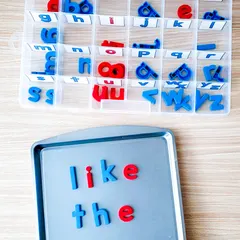
👀 Sight Word Build & Trace: Spell sight words (the, and, like). Say the letter's name while you trace it with your finger!
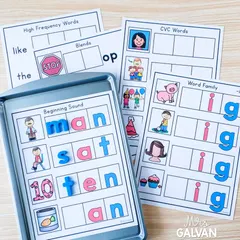
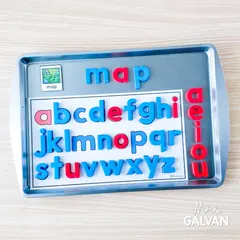
⭐⭐⭐⭐⭐ This is an excellent resource for a classroom center. It effectively allows students to apply their phonemic awareness skills to practice word construction, reinforcing the concepts taught in the Kindergarten curriculum. – Bengy E.
Now that students are able to read CVC words and high frequency words. The final step is to read sentences that include the sight words they have learned and cvc words, so students can practice reading fluently.
Want the inside scoop and some FREEBIES?